
Remote Tranquillisation Services
Blow Dart & DanInject Pneumatic Dart Gun
At Dr Lloyd’s Mobile VetCare, we provide specialised remote tranquillisation services using veterinary-approved blow dart and DanInject pneumatic dart gun systems. These techniques enable the safe and humane sedation of animals that cannot be approached or handled using conventional methods.
Our priority is the welfare of the animal while ensuring the safety of veterinary staff, pet owners, carers, wildlife volunteers, emergency services personnel and members of the public.
We are NSW Central Coast Council approved contractors, and both hold NSW Tranquilliser Firearms Permits. We are also approved service providers for Wildlife ARC and WIRES, with extensive experience in the safe and humane use of remote tranquillisation equipment.
Review banner here (Google/Facebook?)
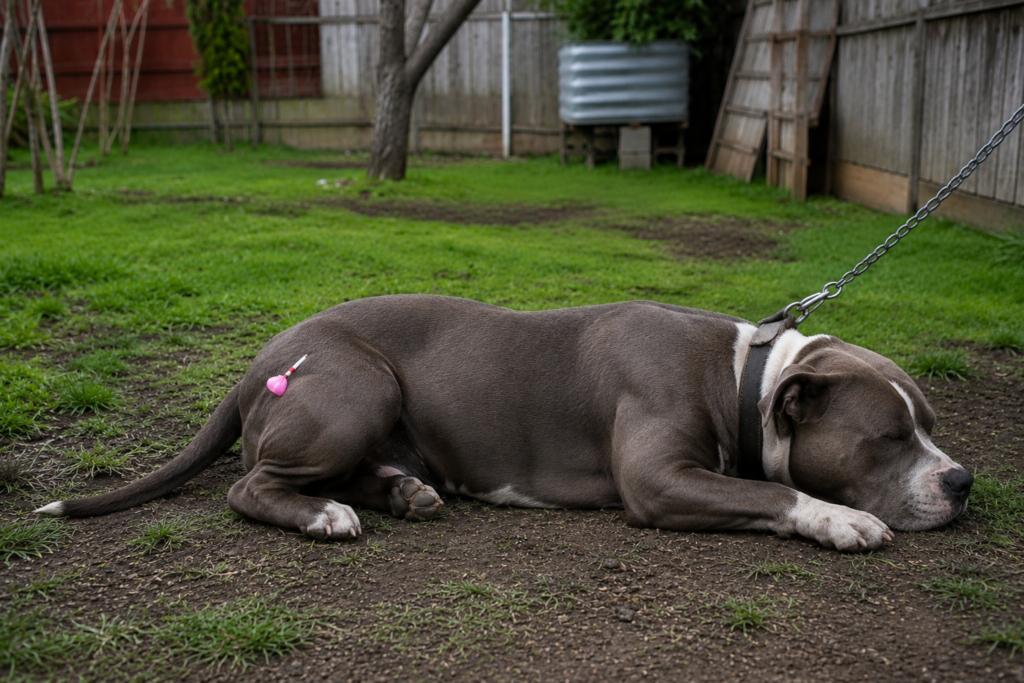
Aggressive or Dangerous Dogs
For dogs that are aggressive, unpredictable or completely unapproachable, conventional restraint and sedation techniques may be unsafe or impossible.
Remote tranquillisation may be appropriate in locations including:
Council pounds and animal management facilities Council ranger enclosed vehicles Animal rescue and welfare organisations Private homes and rural propertiesSedating the animal from a distance removes the need for direct physical confrontation, significantly reducing the risk of injury to owners, handlers, police, veterinary professionals and members of the public.
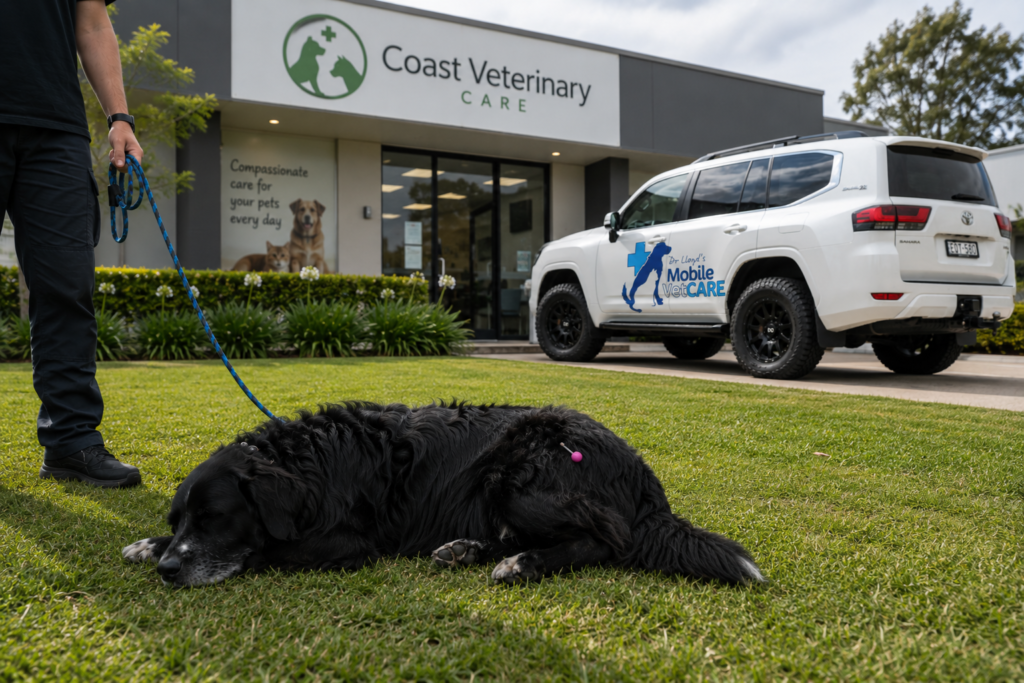
Nervous or Highly Anxious Dogs
Some dogs experience extreme fear or anxiety in veterinary clinics or unfamiliar environments. Attempting physical restraint or administering an injection by hand can significantly increase stress and place both the animal and veterinary staff at risk of injury. For these patients, remote tranquillisation may be performed within a veterinary facility, usually in an outdoor treatment area such as a backyard or car park, allowing sedation to occur calmly from a safe distance.
This approach helps to:- Minimise fear and distress. - Reduce the risk of bites, scratches and other injuries. - Allow safer handling and treatment once sedation has taken effect.
Wildlife Tranquillisation Services
We also provide remote tranquillisation for wildlife requiring veterinary assessment, treatment, humane euthanasia or relocation.
This service is particularly suited to:
- Injured or sick wildlife requiring examination or treatment - Animals requiring humane euthanasia because of severe injury or illness - Wildlife that cannot be safely captured by hand - Situations where pursuit or physical capture would cause unnecessary stressOur wildlife work most commonly involves kangaroos and wallabies, although other native species may be attended where appropriate.
Remote tranquillisation allows wildlife to be managed safely and humanely while minimising stress and improving outcomes for both the animal and the people involved.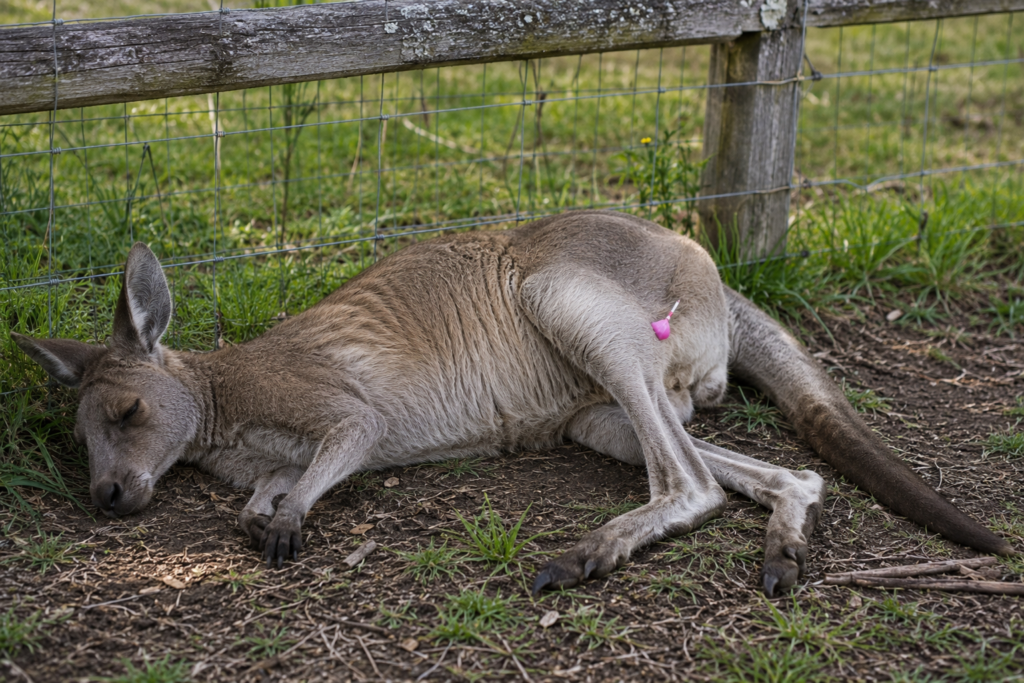
Frequently Asked Questions about Remote Tranquillisation
Is remote tranquillisation used routinely?
No. Blow dart and pneumatic dart gun tranquillisation is not a routine procedure. It is used only when traditional handling or manual injection would place the animal, veterinary staff, carers or the public at unacceptable risk.
Each situation is individually assessed by a veterinarian or licensed darter to determine whether remote tranquillisation is appropriate.
When might this service be used for dogs?
Remote tranquillisation may be considered when a dog is:
- Extremely fearful or highly anxious and cannot be safely restrained.
- Aggressive, unpredictable or dangerous to approach.
- Unable to be safely handled for sedation by conventional methods.
- At risk of injuring itself or others if physical restraint is attempted.
For nervous dogs, the procedure is typically undertaken within a veterinary facility in a controlled outdoor area, such as a yard or car park, where follow-up care is immediately available.
Where is darting likely to take place for aggressive or dangerous dogs?
Remote tranquillisation may be undertaken in:
- Council pounds and animal management facilities.
- Council ranger enclosed vehicles.
- Animal rescue and welfare organisations.
- Private homes or rural properties.
Every location is carefully assessed beforehand to ensure the safest possible outcome for the animal, the public and attending personnel.
Is this service suitable for every aggressive dog?
No. Remote tranquillisation is not always the safest or most appropriate option.
Factors considered include:
- The dog’s size, temperament and medical condition.
- The surrounding environment.
- Risks to the animal, veterinary staff and the public.
A veterinarian will determine the safest and most appropriate course of action for each individual case.
When is this service used for wildlife?
Remote tranquillisation may be appropriate when wildlife:
- Is injured or unwell and cannot be safely captured.
- Requires veterinary assessment or treatment.
- Requires humane euthanasia due to severe injury or illness.
- Requires sedation for relocation.
The service is most commonly used for kangaroos and wallabies where physical capture would place the animal or rescuers at unnecessary risk.
Is remote darting humane?
Yes. When performed by experienced veterinary professionals and licensed remote darters, remote tranquillisation is a humane and effective method of sedation.
It enables animals to become sedated with significantly less physical struggle and stress than may occur with conventional capture methods.
Why can't police always assist in these situations?
In many incidents involving dangerous dogs or injured wildlife, police assistance may be limited.
Police officers may be unable to safely discharge a firearm due to:
- Nearby homes or members of the public.
- Confined or residential environments.
- Roads, traffic or surrounding infrastructure.
- Operational policies governing firearm use.
Where appropriate, remote veterinary tranquillisation provides a safe and humane alternative, allowing the animal to be sedated for assessment, treatment, relocation or humane euthanasia.
Does this replace police involvement?
No.
Remote tranquillisation does not replace police where police attendance or intervention is required. Instead, it provides a specialist veterinary capability when sedation offers a safer and more appropriate outcome than the use of firearms or physical restraint.
Are you authorised to provide this service?
Yes.
We are NSW Central Coast Council approved contractors, and both hold NSW Tranquilliser Firearms Permits.
We are also approved service providers for Wildlife ARC and WIRES, providing remote tranquillisation services in accordance with relevant legislation, veterinary standards and animal welfare requirements.
All procedures are performed using veterinary-approved equipment and medications by experienced veterinary professionals and licensed remote darters, with animal welfare, public safety and ethical practice remaining our highest priorities.